or listen on


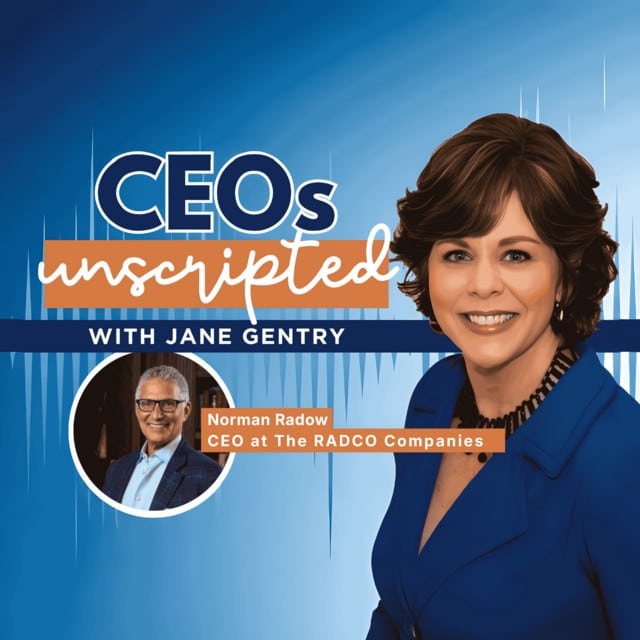
From growing up with limited resources to leading one of the most influential real estate firms in the country — Norman Radow’s journey is rooted in purpose, trust, and long-term thinking.
In this episode of CEOs Unscripted, Norman, CEO of The Radco Companies, opens up about the experiences that shaped his leadership philosophy, why people should never be treated as line items, and what it truly means to build businesses that outlast their founders.
This is a candid conversation about values-driven leadership, calculated risk, and creating impact beyond the balance sheet.
What You’ll Learn
- Why people are assets, not expenses
- How early-life adversity shapes leadership decisions
- Building trust with partners at the highest level
- Knowing when not to take capital
- Balancing risk-taking with long-term vision
- Leading with empathy without compromising results
- Creating culture that scales across growing teams
- Why values matter more than valuation
- Making decisions that align with legacy, not ego
- What responsibility really means as a CEO
Key Timestamps
- 0:00 – Introduction to Norman Radow
- 3:05 – Early life lessons that shaped his worldview
- 8:30 – The foundation of Radco’s leadership philosophy
- 13:10 – Trust, partnerships, and alignment
- 18:40 – Risk, fear, and decisive leadership
- 24:20 – Capital decisions and investor fit
- 30:00 – Building people-first organizations
- 36:15 – Culture as a competitive advantage
- 41:50 – Long-term thinking in a short-term world
- 47:30 – Final reflections and leadership wisdom
Top Takeaways
- Why employees belong on the balance sheet, not the P&L
- How values guide decisions when numbers alone can’t
- The hidden cost of playing it too safe
- Why leadership is about responsibility, not control
- How trust compounds faster than capital
- What real impact looks like when culture comes first
About This Episode
Norman Radow is the CEO of The Radco Companies, a vertically integrated real estate firm specializing in multifamily and mixed-use developments. His leadership approach is shaped by lived experience, a deep sense of responsibility toward people, and a belief that business success should create lasting social and economic value.