In this episode of CEOs Unscripted, host Jane Gentry sits down with Craig Beal — Naval Academy graduate, nuclear engineer, and CEO of Travel Beyond, the oldest US-founded safari company — to unpack the unconventional leadership principles behind one of the most remarkable family business turnovers you’ll ever hear.
Craig shares how military discipline, checklist-driven operations, and a radical employee-first philosophy helped him scale a four-person company into a 39-person specialist safari firm with exceptional retention rates.
What You’ll Learn in This Episode:
- Why niching down — fast — is the smartest growth decision a CEO can make
- How a military-style checklist culture creates five-star client experiences at scale
- The geographic hiring strategy that virtually eliminates employee turnover
- Why Craig covers 100% of employee healthcare — and how it removes anxiety that kills productivity
- How Safari Pros, a competitor collaboration network, actually grows the whole industry
- Why the best CEOs act on decisions they know are right — before the window closes
Keywords:
CEO podcast, business growth, leadership, employee retention, family business, niche business strategy, mid-market CEO, scaling a business, company culture, safari industry, military leadership, entrepreneurship
📌 Timestamps:
- 00:00 — Introduction & Craig’s backstory
- 05:30 — From the Navy to the family business
- 12:00 — The power of niching down
- 18:00 — Employee retention secrets (and the geographic advantage)
- 26:00 — In-office vs. remote: what actually works
- 33:00 — Checklist culture & the Checklist Manifesto
- 41:00 — AI and the future of travel operations
- 47:00 — Managing client fear & crisis transparency
- 52:00 — Rapid fire: lessons for every CEO
Key Takeaways:
- Specialize faster than feels comfortable
- Processes aren’t bureaucracy — they’re freedom
- Take care of employees first; they’ll take care of your clients
- The best CEOs act on the decision they know is right before it’s too late
Read the full transcript
Transcript of the episode, lightly cleaned up.
Jane Gentry: One of the mantras that we give to business owners is kind of stop trying to be everything to everybody, right? It’s one of the traps of entrepreneurship.
Craig Beal: I’ve always had this saying up there just to stay in your lane as a principal and just you know focus on your expertise and be really good at it. Treating your employees, taking care of them first and not your clients because if you take care of your employees they will take care of your clients.
Jane Gentry: Business grows so much better when you niche and get excellent at your core business.
Craig Beal: So if you were a CEO running a business maybe consider being in an area that has a strong local culture where people don’t move out very often, people that like their hometown. If you find a good workplace and become the best at something you can do and specialize in something like you said earlier, people bounce around a lot and if you can choose a skill and get really good at it, think you increase your value.
Jane Gentry: The one mistake I see CEOs make is they wait too long to act on a decision they know is right. Welcome to CEOs Unscripted, the podcast where real talk drives real growth and delivers real results for mid-market leaders like you. I’m your host, Jane Gentry, and each week we’re pulling back the curtain on the unfiltered stories of CEOs, founders, and executives who face the highs and lows and everything in between. After 20 years of consulting in enterprise and then experiencing firsthand the reality of being a CEO in a mid-sized company, I discovered why they say it’s loneliest at the top. For most mid-market CEOs, there’s no handbook. You learn through trial and error or by reaching outside your organization for help. That’s exactly why I created CEOs Unscripted, a bi-weekly podcast by mid-market CEOs for mid-market CEOs. Each episode offers an unfiltered, behind-the-scenes look at the wins, the losses, and the playbooks shared by CEOs and founders who’ve been where you are. No fluff, no jargon, just unscripted, honest conversations about what it takes to lead, grow, and scale in today’s business landscape. If you’re ready for candid conversations, real-world insights, and lessons from leaders who’ve walked the path, you’re in the right place. So grab a seat at the table because it’s time to get real. This is CEOs Unscripted. Welcome to CEOs Unscripted. This is Jane Gentry. And today my guest is Craig Beale, CEO of Travel Beyond, a fun, super fun and super interesting company. You’re kind of living my dream life, Craig, but before we get to that, tell everybody your backstory. Did you come from? How did you get here?
Craig Beal: All right. Yeah, I grew up in Minnesota. My dad was born and raised in Minnesota in 1936. He’s been, family’s been there for a long time. My mom’s from South Africa and they met when my dad was working in Africa in the 50s in an organization called Moral Rearmament, which later morphed into an organization called Up With People, which is still around today. And so, that’s how they met. Yeah, they used to do the Super Bowl shows back in the late 60s in the early years of the Super Bowl. So,
Jane Gentry: I’ve of that. Like a youth organization, right?
Craig Beal: It’s a… It is. And they were both involved in that and their parents financially supported it. So that’s how they met. And then, you know, most people are my age or older or aware of the apartheid legacy in South Africa, which was made life tough for a lot of people. So many people left and moved to the US and the UK and Australia and New Zealand where some of my family left and went to those places. So my parents left in the late 60s and they got married after they got married in South Africa and they moved to Los Angeles and eventually got into, my dad was working for a publishing company for a year or two and then my mom got pregnant with my older brother. We ended up moving to Minnesota before he was born and my dad got a job in marketing with Green Giant, which was a big vegetable producer in Minnesota. At the end of the day, he had gone to Africa when he was 18 and didn’t have his college degree, so that was going to be tough. In 1975, he decided to start travel beyond with my mom and tap into their experience traveling the world for 20 years. He’d already been to, think, 120 countries by the time he was 30 years old. So they started travel beyond. And my dad focused on corporate travel. My mom started a leisure business, but both of them together would host tours to Southern Africa back in the 70s. And in fact, in first grade, I was taken out of school for three weeks to host their first tour because my brother and sister and I were just all under the age of seven and we went along. Keep in mind back then, 99 % of upscale tourism from the US, safari tourism or photographic safari tourism went to Kenya back in the 70s. So Kenya was… Kenya was the place. South Africa was under apartheid. Botswana was almost all hunting. And Zambia, Zimbabwe, Tanzania were not places people visited from the US for various reasons. And so it was kind of unique to be running this business that focused on South Africa back during those days. And we’d end up going with groups of 20 to 30 people, kind of, I would call it huddled masses, because people were kind of a little afraid to travel back then. And that was the style. And not much was around, Mala, Sabi, the blue train and a few hotels that we still use to this day. So, yeah, that was, that’s kind of the history of the company and my parents grew that business in the seventies and eighties. I graduated from high school in late eighties and ended up attending the Naval Academy and decided on a career in the Navy, which I started doing. The Navy sent me to Georgia Tech for graduate school for two years. So I lived in Atlanta on independent study, but I was active duty. I have my bachelor’s degree in systems engineering, which most schools have within their electrical department, and then a master’s degree in fission nuclear engineering, which is commercial reactors and submarine and aircraft carrier nuclear
Jane Gentry: Well, you don’t sound like a very smart guy. I hate to say.
Craig Beal: So I finished my degrees in 96 and then ended up going through formal submarine officer training, which takes about 18 months in three different locations. And then I served three years on the USS Rhode Island in Kings Bay, Georgia as a division officer. There’s nine division officers on every submarine. And then I had a desk job for about a year at the Bureau of Naval Personnel. And went to my second submarine out in Pearl Harbor for three years as the navigator and operations officer on the USS Columbus. So that was my background in the Navy.
Jane Gentry: First off, thank you for your service. How did you get from vision to running the family business?
Craig Beal: So, 2004, which is a year before I left the Navy, my mom and my brother were business partners now. My dad had retired and so they were the ones running the business and they came to visit us in Bremerton where my submarine had gone into dry dock for the last nine months I was in the Navy. My brother announced he was becoming a missionary and leaving the business and my mom was actively looking to sell the company. They’d already built a winter home in South Africa and were trying to live there about six months out of the year. So we went home, I was already considering leaving the Navy and going to graduate school, but it was actually my wife’s idea about a week after they left to purchase the family business and move to Minnesota, which we did. So about nine months later, I tendered my resignation as an officer in the Navy. And about nine months later, we got in our two cars and drove from Seattle to Minnesota, left the Navy on a Monday and showed up at work on Friday and took over the family business. Ended up working with my mom for about three or four months. They went to South Africa for the winter, and then she unfortunately passed away about a year after we had moved there. So that’s how we got started. And the company had four employees and a few contractors, mostly accounting contractors at the time, that would come in and do the books, so to speak. It was a little bit challenging. And the business was, we did plan a lot of safaris back then. Safaris were about, probably about one third of the revenue of the company, but my mom had interests in Grand Slam tennis tours, garden tours to Europe, and just hosting her friends on cruises and safaris. So we had a couple different business lines and then over the past, over the first few years of owning the business, shut down most of those lines of business and focused on, really decided to focus on the safari business. And that was something I’d been going on. Yeah. I’ve been on quite a few.
Jane Gentry: We wanted to. One of the mantras that we give to business owners is kind of, stop trying to be everything to everybody, right? It’s one of the, one of the traps of entrepreneurship is that you want to, know, all these things that you can do. So you try to give everybody a big list, menu, right? Of all the things you can do. And in reality, your business grows so much better when you niche and get excellent at your core business. So it sounds like that’s what you, when you took.
Craig Beal: I totally agree with that, Jane. And we started off with Africa. I mean, we had a long history there. Within that first year, I figured out that we could claim to be the oldest US-founded safari company, which has been proven to be true since then. So it’s something we can say. And then we just really, really, you know, we had a few staff of those four people that had been to Africa, I’d say about 10 times. Two or three of them had been there about 10 times. So we had a good knowledge base. But we just became obsessive about that. We went in all in on Africa. I started working on relationships. We started off with Southern Africa. That was the core of the business. And I’d say in 2005, 95 % of the revenue was from Southern Africa and 5 % from East Africa. East Africa includes the primate safari countries of Uganda and Rwanda, where people see the mountain gorillas and chimpanzees. But we are mostly a Southern Africa business. So we started getting into Namibia, Zimbabwe, Zambia, the other countries in Southern Africa, traveling there intensely. Myself and the few employees back then that we had, we were traveling about two or three times a year to Southern Africa just to try to see every upscale safari lodge and experience all the different seasons and really, really just grow our knowledge base. And that was a good starting point. We weren’t able to focus really on, I would say, high spend. I don’t necessarily like the word VIP clients or things like that. Did think, you know, even words like high net worth sound a little strange to me, but just trying to sell better safaris to better customers has always been our mantra. And then if you look at my bio on our company website, I’ve always had this saying up there just to stay in your lane as a principal. And just focus on your expertise and be really good at it. And I have another human resource principle on our website as well. We can talk about that later. Which is what? Just treating your employees as treating your employees, taking care of them first and not your clients. Because if you take care of your employees, they will take care of your clients.
Jane Gentry: Yeah, so I noticed that your retention rate is incredibly high. And when I talk to CEOs and my own clients, well, before tariffs, their number one concern is talent, right? So the retention rate that you have is unbelievable, Craig. How do you do that?
Craig Beal: Yeah, so of those four employees that were at the company when I purchased it in 2005, my wife and I should say purchased it, two are still at the company. One passed away and one is no longer in the industry. So yeah, we’ve had a, especially with our Minnesota based in office employees, we’ve had a really, really good fortune with retention rate. And I don’t think we could do what we do now without that high retention rate. So some of the things, you know, there is a little bit of a geographic advantage. I haven’t, I should probably look at our org chart and try to do this scientifically and get the exact number. But the vast majority of our staff are from Minnesota and their parents and often their grandparents all live within a 50 mile radius of the office. So when I talk to companies in my business, so people that own tour, you know, I think the most common name for Travel Beyond is a tour operator. And we can talk more about that later if you want, but. Other tour operators, especially ones based in New York and DC and places where nobody’s actually from, have a really tough time retaining staff and retaining talent because nobody’s from there and eventually someone gets pregnant, someone has a their husband changes jobs and they have to move or their wife changes jobs and they have to move. So, there’s a lot of movement in and out of the major cities and it makes it tough to run a business with an in-office business which is another important aspect to our company as well. So, very local staff. Very few of our staff are from outside the industry. We have 39 full-time staff and only five of them came to the company with any experience in the travel industry. So, they’re all trained our way from the ground up. There’s only one starting position at the company. So, that’s a little bit, that geographic element is a little bit of an advantage. And so, if you were a CEO running a business, maybe consider being in an area that has a strong local culture and people where people don’t move out very often, people that like their hometown. And I’m trying to think of some examples, but you know, a place like Grand.
Jane Gentry: So you also said that, my gosh, I just had a birthday and all of a sudden I lost a ton of brain cells and I’m losing my train of thought. So part of it is that, but you also said you’re in office and there’s a lot of pushback on that. And I tend to think that, especially big companies, but even in mid-market, we very rarely incrementally course correct as CEOs, we tend to swing really wide one way and then go, that’s not working and swing really wide the other way. So during COVID, everybody was remote and now there’s this trend to get everybody back in the office. I think the solution is somewhere in between, but your in office strategy. Why do you think that works for you? And do you get any resistance from your team on that?
Craig Beal: So, not on that policy too much. Think, you know, before COVID, we were 100 % in office and it was a pretty crowded office. We have about 4,700 square feet in our building on three different floors. And I would say the basement of that, the basement of the office, which where we had 13 or 14 cubes was not the most compelling workspace, which has two small windows and, you know, somewhat underground. Obviously with the pandemic under all guidelines and especially Minnesota, we had to send all our staff home. And when we recalled people in April of 2021, there was a, you know, that people didn’t want to share offices anymore. I think we have 10 private offices and then some open workspaces. So, we ended up coming back one person to an office with a hybrid schedule. And if, you know, if I had my choice, I would probably rent or, you know, find a larger building and bring everybody into the office, but that hasn’t been the reality since post COVID. We’ve grown a lot and we’ve also have more consultants in the office than we used to have before COVID. We had a lot of consultants that worked remotely. Think we had nine consultants and, or nine people that didn’t work at the office. And now we only have five and more of our consulting, our client interface takes place in the office. Those people have to have a private room with the door shut to have their Zoom meetings because we don’t engage with clients that don’t meet us on Zoom. Or face-to-face to start the process. So it does require, you know, we do need to have those private offices, but… So we called people back and we had to have this hybrid policy because we just didn’t have enough space. So what the hybrid policy says is that our staff have to work in the office 105 days a year with no discernible pattern. And so that means, you know, that they should be there roughly 20 Fridays a month or a year, 20 Mondays, 20 Wednesdays. You know, five days in the summer, five in the spring on Fridays, five in the fall. So just no, no pattern that anyone would notice. It also prevents clicks like the same people showing up on the same days and, things like that. So that’s, that’s been a really successful policy just to let people, you know, police themselves or manage themselves when they’re in the office. And we have certain times when, when certain categories of, of employees have to all be in the office, like all consultants or all travel associates or all. Marketing team or whoever it might be. But, those aren’t very often. So that’s been a pretty successful policy.
Jane Gentry: How does that cause you to manage differently?
Craig Beal: Well, it does. I would say, you do have to manage your schedule with like if you have prime vendors coming in, and for us, that’s going to be a senior person from a Safari lodge chain or a Safari lodge group or in Africa, then we bring all our consultants in those days. But from a management perspective, it hasn’t changed too much. We have five remote employees and one of them is a supervisor with six people that report to him. And so, Cota is our Africa director. He has six direct reports. Are all – Cota lives in California and his six direct reports all work in the office and are from Minnesota. So, that’s – it’s not – other than Cota, it’s – most people are still interacting with their manager face to face and any critical meeting with their manager takes place face to face. Koda does come out every quarter and meet with his team. And then he usually takes everyone on his team and their spouses out to dinner once a quarter. There’s a lot of, he still gets a lot of FaceTime with the staff, even though he lives in California. And then typically he also travels once, maybe once a year, once every two years with some members of his team on a two or three week safari. So they really get to know each other that way. So it hasn’t changed the way we, we manage versus when we were a fully in office, Minnesota based company. Which we haven’t been since 2010 when we hired our first remote employee.
Jane Gentry: Does it impact your collaboration?
Craig Beal: For a little bit, I’d say still to this day about five of our 13, 14 sales people at SellTrips, our consultants, are remote. And so we do have to collaborate instead of face-to-face sharing ideas. We do have to have a sales meeting. I don’t say have to. We do a sales meeting at least every two or three months. But there’s a lot of chatter throughout the day on teams groups. On just email chains, one-on-one with other people, and that’s usually collaborating over product knowledge. Typically, you’re trying to, one of our staffs trying to put a safari together and maybe the client’s asking for something that they’re not super familiar with, but someone else on the team is, we’ll just drop that into a chat and someone always jumps in to help. So it hasn’t really impacted collaboration too much. And then I think, One thing we found is having people in office, the big benefit of that for training is, as I mentioned earlier, we only hire people in an entry role called a travel producer at the company and then they become travel associates. And if they want to become a consultant, they can definitely do that at some point in their career. Once you become a consultant, the way you’re learning a lot of it is just what I call learning by osmosis. You’re in the office, you’re hearing these conversations. You’re hearing people on team meetings. I’m always bringing, if I have a client come into the conference room, which about 5 % of our customers are from Minnesota and they actually come into the conference room in the summertime to do safari planning, I’ll always bring people in training into that meeting. So it’s usually a full conference room of people honing their consulting skills and hearing how we interact with our customers.
Jane Gentry: You’re espousing to something that we talk about all the time with clients, which is development of your people and an intentional strategy for developing people. Incidentally, statistically, that raises your retention rate also. So you’re probably retaining employees in that way and not even realizing that’s part of it. Because as people feel developed and committed to by leadership, they tend to stay longer.
Craig Beal: Yeah, I think there’s a lot of truth to that and we have a person, she used to be a successful consultant at Travel Beyond and we decided to change her role into a training person. So Rachel, David on our team spends a significant amount of time training new hires, usually in groups of two or three. We didn’t hire for two years, but we did hire three people in September of 2023, we hired three people. And she spent about six months training them. And then we just hired four people in the last two months, which is our, you know, and we still have the three people from two years ago. They haven’t left. In different, they’ve advanced into their permanent role now. But yeah, there’s a lot of, I feel the training is high quality. There’s a program. It’s, you know, there’s a schedule. There’s people involved. There’s, I’m involved. There’s field training going to Africa with senior people and learning the product. So yeah, we were pretty deliberate about training and opening up, you know, there are quite a few people who happily and luckily like doing a certain role for a long time and sometimes that can be, you know, we have a gentleman that traveled beyond Bob who’s been planning trips for 35 years. He started right after I was in high school. Jenny Michelson has been doing it for 30 years and she went to high school with me. So, we have some really long-time employees that like to do, you know, just like their job. They love their job. It’s really rewarding and they’ll do it for a career. And we try to make every
Jane Gentry: So let me ask you, I’m sorry, I don’t know if this is a hard question or a softball, Craig, but you have a lot of institutional knowledge in your company that might frighten me if it was my company that if one of those people gets hit by a bus, we’re going to be in a jam. How do you How do you retain that knowledge or codify that knowledge in your organization so it’s not lost if something happens? It’s not in the brains of those people.
Craig Beal: Yeah, that’s a good question. I think our job is actually the amount of the scope of knowledge to have to this job is not infinite. It’s just we have to do what seems like it might be a simple job perfectly for us to grow the business, to retain clients. There can be no error. There can be no surprises. You can’t have a customer show up at a safari lodge and observe another client receiving something that they weren’t offered or told about and now that offering is sold out, whether that’s a balloon safari or a specialist guide shows up and takes some of the clients from Texas on a walk and our clients weren’t offered that and there’s no one that can do that for them. It’s just doing our job perfectly and we are checklist driven, I will admit, and that sounds, I hate to say it because sometimes that sounds mundane. But I did read a book called The Checklist Manifesto that inspired me a long time ago. Also coming from, honestly coming from the nuclear power industry and working on nuclear reactors on submarines, everything is procedure. Everything is check listed. Everything has quality control. And so I’m kind of diverting from your question here. Wait, so you asked, sorry.
Jane Gentry: Not really. Mean, a checklist is a perfect example of how to make sure that, you know, making air quotes here, that simple activity is done perfectly. Because I could see that would be, you know, a safari is something you don’t want to a mistake.
Craig Beal: Yeah, I mean, think if you look at our sales process, it’s probably – the sales process probably has – I’m not looking at it. It probably has about 60 steps to it. And in each step is a hyperlink to a procedure somewhere else in SharePoint. So if you’re progressing through the step and, all right, now the client’s ready to confirm, I got to send this email to this person at the company to request these forms, to request them to send our bank details because they want to pay by wire instead of American Express. That all that stuff goes to a procedure library and there’s a procedure for everything we do. So when you’re training people, it’s more just training them what the procedures are, what the words on, what every word on every step of the procedure means. And a little bit of that again comes from my Navy background, I think in, I don’t know if it’s this way in commercial nuclear power, but in the US Navy, the procedure manuals are, there’s two columns. The left side is normal font, and it tells you what to do and the right side is italics and it tells you why you do it that way. And if there’s something really bad that could go wrong, if you screw it up, there’s a link to a incident report or something you can train on that happened. And examples of that in our industry are if a client has the wrong type of insurance or if a client has too short of a layover on the way to Africa, they’re going to miss their flight and they booked it on their own, but we still need to tell them because it’s going to become our problem if they arrive late. That and we need to help them. We have checklists.
Jane Gentry: Actually, love that. Think that’s fantastic. And I was just talking with a client about how AI is going to help love really make that more easy. Right. Because what we see sometimes is you do something like a sales process, for example, you put people through a day of training and you throw everything in the book at them and then you go, OK, go. That You can’t retain that knowledge that you got in one day. But if you leverage the checklist like you have or AI to walk you through that process and tell you the what and the why and the how, you get much more adoption. You get quicker learning around those activities and you get more engaged employees because they know what the expectation is. So yeah, I think that’s fantastic.
Craig Beal: Yeah, I’m very interested in AI implementation. We haven’t done much beyond just writing projects yet, but there is a lot of potential, especially for proposal generation. The trips we put together are very complicated, and you still need to send the proposal with all the fine print, but you also need to tell the client what they’re buying and writing. Because even though I’ve met with the principal, the person that’s going to pay us on Zoom or face-to-face, they got to get buy-in from other family members that might not talk to us. So you have to have lots of information for them to get excited about it. So yeah, that’s interesting.
Jane Gentry: Yeah, but also workflow, right? Mean, I think you’ll find that there are some exciting workflow applications in AI at this point that will do a lot of the stuff that your checklists are doing in the future. Yeah. Yeah. Yeah. So I think it’s exciting. I do have people ask me
Craig Beal: Absolutely.
Jane Gentry: Specifically, though, how do I use this AI application? And I’ll say that’s not really the right question. The right question is, what is it that I can enable in my company with AI? You know, what could be better? Yeah, that’s the right question. And then you’ll find the right application. Right. Right. But I love the idea of the way you described how the Navy does it. And, know, I’ve said this probably a hundred times on the Web. The podcast by now. I’m a military brat. So I was raised with people that think that way. And my whole family is military. So I get that. And the military is one of the top leadership and frankly, project management institutes. And you can go to in the world.
Craig Beal: Because they take leadership as an academic science and as a practical, know, in practicality as well. So, you know, and there’s a little bit of that adopted at Travel Beyond. Think that’s, going all the way back to one of your original questions about retention, a lot of it is just leadership and just, it’s kind of simple stuff, making sure, you know, making sure people are well-fed, well-housed, their families are taken care of. And so, you know, things, know, we… One thing that really resonates with our staff, because I’ve heard this in writing at least three or four times, including yesterday, over the past six months is we’re a 36 females and four men at the company, or 35 females and four men. And I’ve told the staff, want our staff to be the primary breadwinners in their family. Means a lot to them. Offer our staff 100 % health care for themselves and 50 % for the rest of their family. Our younger employees and everybody, they have 100 % health care. Think it’s everyone that’s married or has a spouse or partner, I would expect them to chip in for their health care as well, which is why we cover half of it. But I think that’s
Jane Gentry: But you’re removing anxiety. And that enables people to focus on their job.
Craig Beal: Yep, you remove a lot of anxiety. Exactly. I think we have a really generous PTO program where people get… They start off with 20 days of paid time off. Have also seven holidays that travel beyond. And then the office is shut down with pay from December 25 to January 31. There’s… Traditionally, nobody calls us to plan travel during that time. They’re with family and it’s a very quiet time. So we just shut down the office and we give everyone four days of regular pay during that time period. With the only caveat being if you’re a consultant and one of your clients needs help, then you need to log in and help them no matter when it is, unless you want to use PTO during that time. And I can tell you, everybody takes that gamble that their clients are going to be, you know, not get in trouble and they won’t be called into action. Which kind of goes on to the next step too. When there’s a very stressful situation, are myself, I will personally take it over and relieve the staff person of that situation. Or, and this is for situations they didn’t create. So this could be, you know, something quite catastrophic that might happen while clients are traveling, usually related to a client getting stranded in Europe on the way to Africa or stranded at some, you know, flight cancellation at the gate and now they got to turn around. And I usually jump in and take over those situations or one of our two sales managers will do that to relieve our team of the stress. If it’s outside working hours and it’s becoming stressful. Lot of clients are, of course, many clients are very easygoing during those situations. They know it’s not our fault. They’re not blaming us. They correctly direct any of their negative emotions towards the airlines or whoever it might be. But we still need to be helpful. And then, know, every once in a while, we’ve, you know, I think, I’m sure every company that sells directly to a customer that’s paying money and we have a very a very opaque, high-cost product that we’re selling and there’s a little bit of fear and anxiety involved and often like a person that’s kind of being dragged to Africa by their spouse and doesn’t want to go. And so once in a while we get a really unpleasant customer and we also alleviate our staff of having to deal with those types of clients and I will usually take over that process.
Jane Gentry: Actually, Craig, you teed up. You teed up this curve ball that’s been on, I’ve been thinking about as we’ve been talking and I’ve been debating, do I ask him this question? Do I not ask him this question? But I’m going to go for it. So at the time that we’re recording this podcast, we’re in the middle of a bunch of tariffs. And what, what I’m seeing that cause more than anything with clients of my own and their clients is fear. And it’s really difficult to deal with fear of the unknown, right? You can’t really predict what people are gonna do, how they’re gonna react to things. And I mean, let’s face it, you take people to a place where there can be a lot of unrest. So what do you do when you’re gonna take somebody to a part of Africa where something happens and there’s a lot of fear around that? How does that impact your business and how do you deal with? With issues like that.
Craig Beal: Yeah, good question. And I think, you know, we don’t take clients to Africa. 99 % of our customers just travel by themselves. It’s one couple or a family and they’re traveling. They leave the US alone and they travel throughout Africa with just themselves. Now, of course, everywhere they go, you know, if possible, and it is possible at most airports in Africa, we have someone meet them right off the plane. So right after the wheelchairs, there’s someone waiting with their name on the sign and they are handheld and escorted everywhere they go. But still, that doesn’t alleviate all anxiety, of course. I think to prevent this stress, mutually prevent this stress, we’re very blunt with our clients. There’s been an ongoing situation on the border in Rwanda for the past six months where there’s a pretty unfortunate security situation taking place 10 miles from where, unbeknownst to most of them, where every single American that Gorilla Treks in Rwanda is 10 miles from a very unstable situation in the Congo and they don’t realize it. A lot of them don’t. But we’re very blunt with our clients about that and I say specific things. I will always tell a client before they’re booking a trip to Uganda or Rwanda that money to Africa is a one-way street. No wire has ever been sent from Rwanda back to America for travel bookings. So you cannot, you’re never getting your money back once it’s paid and you’re going to pay us deposit. We’re going to immediately confirm your accommodations, buy non-refundable guerrilla permits. The only way to redeem that money is by traveling or buying travel insurance if the situation you’re insuring is insurable or in a rare case, you might be able to defer your trip. And then I go onward, I go deeper into that and say, and the arbiter of safety is not me or you, it’s the people on the ground in Rwanda. They need to, if it’s not safe to go, they’re not going to want you to come, but it’s not up to you to decide if it’s safe to go. I advise my clients to get on the State Department’s website, read any warning they can find before making deposit. Then I’d say, with all that said, nothing, no client of ours has ever been harmed in Africa and we send thousands of people there every year. I also don’t know of anybody that’s ever been… There’s been a few safety scenario or situations in Cape Town, but nothing that’s ever impacted upscale American tourists in the safari areas. I tell people that as well.
Jane Gentry: So you’re saying frankness, transparency, arming people with as much information as possible, which I think is probably the same for any business and collaborating for a solution.
Craig Beal: And you know, that’s… We didn’t need a lot of favors from our partners in Africa before COVID because we quite honestly, our clients were well prepared. There was no surprises. And when COVID started though, everyone did shut and now they can’t host. And so we had 631 safaris planned in March of 2020 under deposit. Money had been paid to Africa and we were able, I think seven of those people… Dispute it, tried it, well, I know exactly seven people tried to dispute their credit card charge to get their money back. They all lost. You can’t dispute a credit card charge for a safari deposit usually. We had a couple of people pass away before they could travel, but for everybody else, those 631 trips were deferred and the clients traveled on the exact same trip for no additional cost in 2021 or 2022. And then some people that couldn’t travel until 23, 24, 25 still went on the same trip. They just paid more money to do it. But nobody that was under deposit in 2020, or actually everybody under deposit in 2020 was given the opportunity to take that trip after COVID for the same price.
Jane Gentry: You know, I don’t know if I, when we spoke, one of the things that I thought was interesting was how you talked about how the companies in your industry that are competitors share certain resources or collaborate with each other. And I love that kind of big pie thinking. You don’t see it happen a lot. Can you talk a little bit to that?
Craig Beal: Yeah, you know, Safari Pros is the organization I was speaking of and it’s an organization that I founded with four other people back in 2013 in response to, you know, in response to threats that we, to us that were external to the US, you know, the external to the companies here in America that ended up starting to work together. And a lot of that had to do with just, you know… Being treated unfairly by suppliers that were favoring friends of theirs that might be in their own country, favoring them with rates which would allow them to sell things for, sell Safaris for cheaper than we were. So, we collectively flexed our muscles and made a lot of things much more equitable and fair in the Safari industry as far as what pricing is offered to what customers and through what channels. But a lot of what we, and that’s what we had a little bit of a aggressive and contentious beginning the organization did. But then it quickly morphed into a much more positive organization where we’re advocating for each other and working with suppliers positively. But a lot of the stuff we do now is knowledge sharing. So I mentioned, you know, being able to tap into our own team for knowledge but when that well was ever dry, which it rarely is, I can actually go into a chat room with Safari Pros and get information. I’m really off the wall things in Africa. Maybe once a year a client might ask me about some hotel in Lamu on the northern coast of Kenya and I can find that answer very easily and quickly and I can usually identify somebody in Safari Pros that’ll then call me or WhatsApp me that has just been there. So in fact, I just had that happen three weeks ago. Somebody, a client asked us about a resort in Mozambique that I’d never heard of. Nobody had traveled beyond or never heard of. And I messaged the group and my friend Ian Proctor from Ultimate Africa in Seattle was sitting at the beach at that resort at that moment and he just responded, yeah, I’m here right now. What do you need? So, you know, it’s a very much a knowledge sharing group. We also share a lot of resources, especially legal resources. Know, things do go wrong on safari. Three Americans were killed in Africa last year by animals. All three were septuagenarian American women killed by elephants and hippos. All three of them happened to be in Zambia. And generally what happens is the client’s estate ends up trying to sue people in Africa and they come up empty-handed. You cannot win a lawsuit against anybody in Africa. And so then they turn to the US tour operator or travel agent or both because half our customers are travel agents and are a little bit more than that now. And they’ll try to sue the American companies. So you have to have a pretty ironclad contract that is actually signed by every adult that travels. And that contract, we collaborate on that contract. One, it’s expensive and there’s only a few good attorneys in the US. We use a guy named Rodney Gold who TravelBeyond’s worked with since before Safari Pros existed. But we all operate off the same client contract and that helps too because the client, it’s a very onerous contract that basically pretty much says we’re not responsible for anything because we actually can’t control what happens with the wild animal in Africa. But, you know, some clients are hesitant to sign that, but when they find that every company requires it, it’s a… They end up…
Jane Gentry: Was going to say it’s good for the industry. Yep. It’s a relatively small industry. It’s good for the industry. So it just as a side note, I was traveling home from Vancouver from a speaking engagement. So that’s a five hour plane ride to Atlanta. And my seatmate was Gary Player. And Gary has a ranch and a golf course with Jack Nicholas in Africa. And As we became new best friends, one of the things that he told me was that they have a their golf course is in the middle of a, you know, area with a lot of wild animals and people try to approach these animals like they’re at a petting zoo. And he basically said, God, Jane, you can’t fix stupid. You know, I just we’re constantly saying to these people, this is not it’s not a petting zoo. Don’t walk up to those, know, those. Those elephants or whatever and try to pet them because you could get hurt.
Craig Beal: That’s not Leopard Creek, is it? It’s the name of the golf course.
Jane Gentry: I don’t remember. I don’t remember the name, but what a fun, fun experience to be with him. And can I just tell you, and I have been a golfer in my lifetime. I’m not at the moment, but I did. I did notice that all of the other men in first class were really, really unhappy that this little five foot two chick was sitting next to one of their heroes.
Craig Beal: Thank you.
Jane Gentry: And chat him up, Yeah, so I could write a biography now on Gary Player. Spent so much. We had a wonderful time. But I do remember that specifically because some guys had played on a course in Canada somewhere and we’re trying to show him this picture of this bear on the golf course. Yeah. And that’s when he said to me, you know, we have a we have a I have a course with Jack Nicklaus in Africa and you just can’t fix stupid Jane that these people try to come up and these animals and don’t realize you’re in the wild in Africa. Get a grip. So yeah, so no commentary on those people who got hurt in Africa last year. But sometimes we just don’t think. And you were talking about early, early on how many countries you’d been to. I don’t remember the statistics, but I was reading recently because I, you know, I’ve, I’ve been to a lot of different places like you. And I just kind of assume everybody’s done that. But I think it’s somewhere well over 75 % of Americans have never been out of their state. Let alone out of the country. It’s an unbelievably high statistic.
Craig Beal: That’s a… Yeah, and It is, think only to this day, only 33 % of Americans have ever owned a passport. So we use those numbers to scale.
Jane Gentry: It’s crazy.
Craig Beal: Yeah, we use those numbers to scale the market. And I think there’s a general statistic that the South African Tourism Board used to come up with that 30 million Americans would like to go to Africa. 10 million will actually make it there someday because people will wait too long, they’ll get too old, or they will never acquire enough money to make them feel comfortable doing it. You actually don’t need a lot of money to go on a safari relative to other types of vacations. You know, some people have a misconception about that. We, for us, we do work with, we generally work with much more expensive safari lodges, but you could still go to Africa and have a nice trip for as much as a trip to Europe or a nice beach resort in Mexico. So yeah.
Jane Gentry: Well, I’m a personal invitation to his ranch and his phone number, but I just noticed him getting interviewed at the Masters Sunday and he’s 89. So I better bust him.
Craig Beal: You better go.
Jane Gentry: I’m gonna get over there and visit.
Craig Beal: We’ve sat next to a lot of interesting, well-known people on airplanes too, so. Yeah, that’s interesting.
Jane Gentry: I know, and I’m not usually a chatter. You know, airplanes are usually my quiet time. I don’t work on airplanes. I don’t talk to people, but I did, he sat next to me and I said, I bet you a lot of people tell you, you are the spitting image of Gary Player. You know, and which was the right intro. So anyway, this has been so fun learning about, learning about how you run your business, Craig, we usually end this with a series of quick rapid fire questions. Are you open to that? Sure. OK, what is the one thing you learned early in your career that you think impacted your success?
Craig Beal: I think you learn early, like who did in all, with all stakeholders who you can truly trust and who you can’t. And don’t want to elaborate and talk about names or people.
Jane Gentry: Do you young people today would learn?
Craig Beal: I think that if you, you know, find a good workplace and become the best at something you can do and specialize in something like you said earlier, I think there’s people bounce around a lot and if you can choose a skill and get really good at it, I think you increase your value. And I think staying…
Jane Gentry: There’s a proverb that says,
Craig Beal: Go ahead.
Jane Gentry: There’s a proverb that says that the best time to plant a tree is 20 years ago. The next best time is now. What do you wish you’d done 20 years ago that you do now?
Craig Beal: I wish that we’d specialized faster. Think this industry, you know, where we, it took me a while and I was often not confident that, you know, that at the beginning that I had the knowledge and skills to lead people to the business model that we have right now. So I took things slower than I wish I would have.
Jane Gentry: That’s good advice. Tell CEOs, the one mistake I see CEOs make is they wait too long to act on a decision they know is right.
Craig Beal: That’s exactly what I’m trying to say.
Jane Gentry: Yeah, and if it’s an opportunity, a lot of times that window closes, right? So yeah, I think that’s great advice. What do you do personally when you feel stuck?
Craig Beal: Usually, stuck with a decision I will… My wife’s my business partner, so we chat a lot. And I chat to my managers a lot about stuff, so we just share challenges. And then beyond that, I have a couple people in the industry from that group, Safari Pros, that I’m really close friends with. And in fact, one’s become a business partner of mine. We actually own a tour company in Cape Town together with some vehicles, separate business. Yeah, so I’ll talk to some peers of mine in the industry and talk things through.
Jane Gentry: I think that’s great. I don’t hear that answer a lot that I reach out to other people in the industry, but I love it. Is there a question you wish I’d asked you, Craig, that I didn’t?
Craig Beal: I don’t know if we ever fully finished the retention, like all my thoughts on that, but we made a lot of progress. What would I add to that? Yeah, I think, you know, I talked about the geography where people live and where our office is located. I talked about just, you know, some of the benefits and it just talked about complete transparency about, you know, what people could expect for compensation and things like that. And so, just taking care of all that stuff and I think
Jane Gentry: What would you add?
Craig Beal: Just making sure, and I think the training, we did hit on the training now, just having opportunities for advancement and growth, but also having, you know, just making the job you do every day, because we do need about 30 people to do the exact same thing for many years if we’re going to be successful. So you need to make that exact same thing rewarding and fun. At the end of the day, mean, rewarding is kind of the key word there too. They have to make money doing it. And I think right now, the stress that the main stress our staff are under is, my sense is, the ability to change their housing situation that’s really, really difficult for anybody right now. The cost of a new house is high, the cost of a mortgage is high. And so a lot of our staff, I think, feel kind of stuck in a housing situation that they’d rather not be in. We’re trying to, you know, my objective is to make sure people get a nice bonus every year that they can put towards a new down payment and people have, I’m happy to say after our staff bonuses last October, we had several people at the company buy new houses and tell me that it was their bonus money that made that possible. I think that’s important that people have something they can always be hopeful for with something like a housing situation.
Jane Gentry: Well, you’re understanding that we don’t live to work, we work to live. Right. And what are the things that are important to the people that work for you? So, Craig, this has been, as we say in the South, a hoo-ha. I’m sure you miss it. I’m sure you miss Atlanta. So I had a lot of fun chatting with you and I’m just so grateful for your time and your insights and I appreciate you.
Craig Beal: Thanks, Jane. And I’m currently in the South. On St. Simons Island, Georgia, and the beach is 100 yards that way.
Jane Gentry: Welcome to Georgia. Thank you. Talk soon. That’s a wrap for this episode of CEOs Unscripted, where real talk feels real growth. I hope today’s conversation gave you fresh insights and inspiration for your own leadership journey. If you love this episode, be sure to subscribe so you never miss a candid conversation with a trailblazing leader. Until next time, keep leading with intention, growing with grit, and driving for results.
Craig Beal: Bye.
Jane Gentry: I’m Jane Gentry and this is CEOs Unscripted. See you next time. You
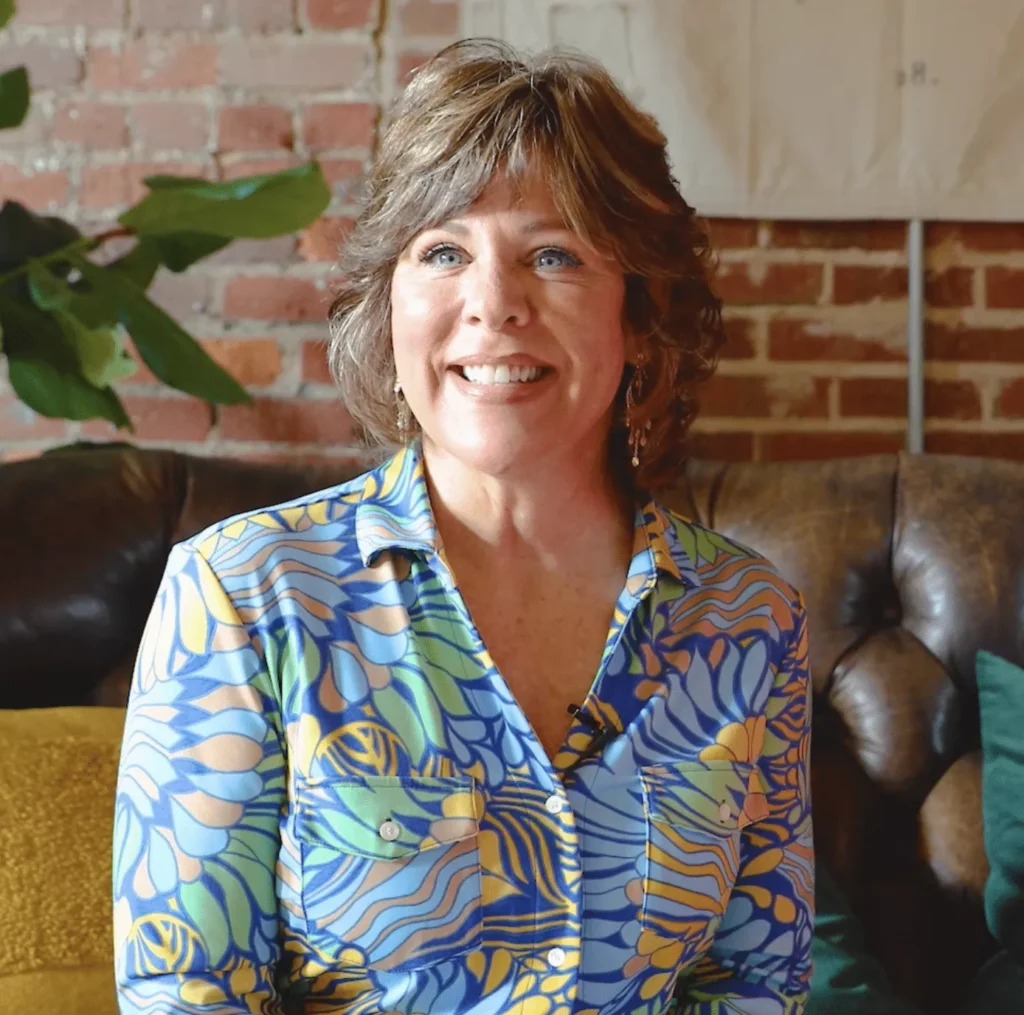
About Jane Gentry
Jane Gentry is a strategic operating model advisor and former CEO of two PE-backed companies who helps mid-market CEOs redesign their companies when revenue grows faster than the business was built to run.
Rate, Review & Follow
Enjoying CEOs Unscripted? We’d love to hear your thoughts! Leaving a quick rating and review not only supports the show but also helps other leaders discover conversations that can elevate their business journey.
Don’t forget to follow the podcast, too! With more insightful episodes and unfiltered conversations on the way, you won’t want to miss what’s next.

CEOs Unscripted
Where Real Talk Drives Real Growth And Delivers Real Results For Mid-market Leaders.
Welcome to CEOs Unscripted, the podcast where real talk drives real growth and delivers real results for mid-market leaders. Each episode offers an unfiltered, behind-the-scenes look at the wins, the losses, and the playbooks shared by CEOs, founders, and executives. Grab a seat and join us for unscripted, honest conversations about what it takes to lead, grow, and scale in today’s business landscape.