Let’s look at the mid-market from a Fortune 100 perspective.
Are you a mid-market CEO struggling with cash flow, talent retention, or decision-making speed? Fortune 100 veteran turned growth company CEO Stacey Tank reveals the exact strategies that transformed her leadership from managing billion-dollar enterprises at GE, Home Depot, and Heineken to scaling a high-growth beauty brand.
Here are some key points of the conversation:
- 05:30 – Why “Cash is Queen” in Growth Companies
- 12:45 – The “Aces in Their Places” Talent Strategy
- 18:20 – Decision Speed: 51-49 vs 95-5 Choices
- 25:10 – Overcoming the “Know-It-All” Leadership Trap
- 32:40 – When to Add Process vs Stay Agile
- 38:15 – 3-Dimensional Innovation Strategy
Jane and Stacey get candid about:
Cash Management for Growth: Why Stacey checks cash daily instead of P&L statements. Get specific frameworks for managing cash flow during scaling without debt or investors.
Revolutionary Talent Strategy: Real example of hiring an office manager who now runs warehouse, HR, and marketing. Learn why attitude beats credentials and how to create cross-functional collaboration.
Decision-Making Mastery: When to make lightning-fast decisions vs. letting situations “ripen.” How enterprise complexity (51-49 decisions) differs from growth company clarity (95-5 decisions).
Authentic Leadership: Breaking the “Hermione Granger effect” – the need to know everything. How vulnerability and asking for help creates stronger leadership.
Smart Process Implementation: Stacey’s criteria for when to add structure: when confusion slows teams down and meaningful value is at stake.
Innovation Strategy: Product, business model, and supply chain innovation during uncertainty (including China decoupling strategies).
Books mentioned:
Adversity Quotient: Turning Obstacles into Opportunities
What Got You Here Won’t Get You There: How Successful People Become Even More Successful
This episode is perfect for: Mid-market CEOs ($10M-$500M revenue), founders scaling startups, enterprise executives considering growth company leadership, business owners struggling with talent retention.
Quote of the Day
“You cannot herd cats, but you can move their food.”
Episode Guest
About Stacey Tank, CEO of Bespoke Beauty Brands
Stacey Tank is the CEO of Bespoke Beauty Brands, which owns high-growth brands like Jason Wu Beauty and KimChiChic. PIn her previous role as Chief Transformation Officer at Heineken, Tank shepherded the global “EverGreen” growth strategy. She also held senior roles at The Home Depot, overseeing multi-billion-dollar service businesses, and began her career at General Electric. Tank is known for combining business with social impact, having led major initiatives in veteran housing, skilled trades education, and sustainability. She is the founder of the mental wellness nonprofit Our Happy Place and serves on several corporate boards.
Read the full transcript
Transcript of the episode, lightly cleaned up. Speakers are not labeled in this one.
In a growth-based company, is queen. I think about cash first. I look at cash every single day. It might be dramatic for them. They might not have the skills, capability, a mindset to be able to navigate that kind of, or accept that kind of decision at that moment. My ego is no longer attached to Stacy has to know, the Hermione Negranger effect of like, I know it all.
Right. Stacy, you have to get your aces in their places. And I really like that better. So. How do you get folks in the roles where they can thrive and where they can contribute to the organization? You cannot herd the cats, but you can move their food.
And it’s all about the shared goals, right? What are the incentives here? Every town hall, every… Welcome to CEOs Unscripted, the podcast where real talk drives real growth and delivers real results for mid-market leaders like you. I’m your host, Jane Gentry, and each week we’re pulling back the curtain on the unfiltered stories of CEOs, founders, and executives who face the highs and lows and everything in between. After 20 years of consulting in enterprise and then experiencing firsthand the reality of being a CEO in a mid-sized company, I discovered why they say it’s loneliest at the top.
For most mid-market CEOs, there’s no handbook. You learn through trial and error or by reaching outside your organization for help. That’s exactly why I created CEOs Unscripted, a bi-weekly podcast by mid-market CEOs for mid-market CEOs. Each episode offers an unfiltered, behind-the-scenes look at the wins, the losses, and the playbooks shared by CEOs and founders who’ve been where you are. No fluff, no jargon. Just unscripted, honest conversations about what it takes to lead, grow, and scale in today’s business landscape.
If you’re ready for candid conversations, real-world insights, and lessons from leaders who’ve walked the path, you’re in the right place. So grab a seat at the table because it’s time to get real. This is CEOs Unscripted. I’m glad to have you back on CEOs Unscripted. This is Jane Gentry. And today I have Stacy Tank with Bespoke Beauty Brands.
Welcome, Stacy. I’m so thrilled to have you. Thank you, Jane. It’s great to be with you. You and I have some things in common and I can’t wait to get into that. But the way we start this generally, Stacy, is I ask CEOs to give me their backstory.
And I was on your LinkedIn profile this morning and I would just encourage everybody to go on there because it’s filled out a thank you very much. I’m like a lot of CEOs on LinkedIn. But secondly, what a fun resume you have. So I would just encourage everybody to get on LinkedIn and learn about Stacey that way. But I want to know the backstory. How did you get where you are today?
Sure, well maybe to flip it on its head, everyone talks about their career first and their job history and all that. Usually I do too, but since you probably want to know a little bit more of what you can’t read there, I’m a mom of two boys, 16 and 10, and my husband and I have been together for 25 years. So I feel extremely lucky, also the older that I get, that I… Have had this very strong and supportive family structure where my boys are cheering me on and my husband is enormously supportive because none of the other things that you see on LinkedIn would be possible without that. And the older I get, the more I realize that it’s a cliche, but it’s a cliche because it’s true. They are the most important thing in my life.
So we have lived all over the world. I have moved over 20 times in my life from places like Brazil and Mexico. With GE to all over the US and Canada and then Western Europe, Germany, the UK, France, and most recently we’re living in the Netherlands outside of Amsterdam when I was working for Heineken. When I was a kid, I had an artsy side and a mathematical, math and science side. My grandfather was a mathematician for IBM and I also had a lot of artists and chefs, chefs and teachers in my family. And I think through my entire life, I’ve been trying to contribute in a way that allows me to balance the art and the science because I really have both present in my life.
I’m a musician. I grew up in the theater, but I also loved algebra and calculus. And I’ve been in the business world trying to find the expression of how you can live both of those things. I never knew what I wanted to be when I grew up. And I would tell you, Jane, I still don’t know what I want to be when I grow up. Think the CEO role is it feels great.
In many ways because I get to be what’s needed for the company. And sometimes that’s more on the brand building side and sometimes that’s reminding the business that cash is queen and putting on my CFO hat. I meandered through the functions in business, spending 10 years with General Electric in the beginning of my career, going through a leadership program and then their corporate audit staff, which gave me this really good foundation for understanding how business worked. I did not like that the finance department could throw around language. And terms and acronyms. And I felt because I didn’t understand it at the time, sort of pulled the wool over my eyes.
And I thought, I don’t want to feel like that. I want to understand the financials deeply as the language of business and the expression of whether or not you’re winning in business. So that foundation then allowed me to do a lot of other things over time. Ran multi-billion dollar businesses for the Home Depot and the services space. And now I run a growth phase company after being in kind of Fortune 100 for a couple of decades. I, through complete serendipity, ended up going into business with a friend of mine and changing industries from beer to beauty, which is frankly a lot.
Although, if you have enough beer, we’re all beautiful. Exactly. That’s also a good day. I love that story. And we knew we had things in common. I also have moved quite a bit in my lifetime because of a military family.
I was in the theater for quite a long time. So I knew there was a reason that we connected. Now, I’m going to let you have the whole math calculus thing. I’ll just hand that over to you. Although my left brain is developed, it’s not quite that developed, I have to admit. So one of the things, here’s the other thing that we have in common that I wanted to get a little bit with you.
And that is you came from big companies, enterprise. The first part of my consulting career was also in enterprise. And I have I have found there to be a lot of similarities in mid-market, but also quite a bit of things that are different. I would assume that you’ve had that same experience. Absolutely. And what do you see?
What have you seen? I ask myself every day, are we bringing the best of big company life to help us thrive as a growth-based company? There are a couple of things that to me have been profoundly different. One is that when I was sitting on the executive committee of Heineken in the Netherlands, or when I was working for the CEO of Humdeepa, all the decisions that come to you are 5149 decisions. If they were easy to make, someone on your team, because you have a fabulous team of executives who are super capable and all the way through your organization, they would have made that decision already. So when it comes to you, there really is no good choice.
You’re kind of picking the least worst choice. And there’s such a complex stakeholder map that you’re letting a lot of stakeholders down with whatever decision that you make, a lot of complexity. In a growth phase company, the decisions that are coming to me on a daily basis feel like 95-5. They are so much more obvious in terms of decision making and what would be nutritive to the business most of the time. And so you’re able to, because also you have simplicity with your stakeholder map, you can move with tremendous speed. That feels very different.
Another thing that feels different, obvious, but true, I spent most of my time thinking about the profit and loss statement financially and then would appreciate the balance sheet. I thought about cash last. In a growth-based company, cash is queen. I think about cash first. I look at cash every single day. And then if we get that right, things will express themselves properly and the P &L and balance sheet will be.
Healthy but cash is queen. There’s a fragility to growth phase businesses that just doesn’t exist in a larger company. And I was talking to another woman who’s an executive in a really cool high growth company. You know the name, they’re extremely growthy, they’ve raised hundreds of millions of dollars. And her husband was joking like, so are you going out of business today? Like what happened today?
And it’s true that things come up, for example, the Tara F situation that We would have been okay, but that was extremely disruptive. And we’re lucky that we don’t have any debt. We don’t have any outside investors. So we’ve run this business with conservatism so that we can weather these types of things. But I sit on the board of companies or I know friends that own and run companies, especially if they have a lot of debt, high interest debt that they’re servicing, this is not a good situation for them. There’s a fragility that’s more difficult to navigate.
And then probably the last reflection is around talent and culture. In a big company with tens of thousands or hundreds of thousands of folks, you do have to conform a bit more because you need some standardization or to be able to work together. You need to be able to flex and compromise because you can’t just have your way of doing things and then a hundred thousand people have their way of doing whatever can be a big thing like new product introduction or a little thing like your expense receipts. You have to have standardization. In an early phase company, you don’t have to have as much of that. And I think early stage attracts people who like to operate with more freedom and creativity.
Think the types of folks that thrive in this environment would feel a lot of energy zapping happening for them in a large company and see it as, you’re tying my hands. Know, I feel like I’m. In a straight jacket here because you just make me do these things this way. But I also understand that you can’t have hundred thousand ways of doing things or it’s chaos and you’ll be really slow. That’s actually to try to get speed in a big company. So that’s a profound difference.
I enjoy, I mean, it’s wild to me still the kind of creative freedom we have in this company and the way we can move so fast. And making decisions and frankly, winning market share a lot of the time and winning over new consumers just because there’s a profound simplicity when you’re in this kind of high growth but early stage phase. So you said something that I find really interesting because I think that one of the things I see on a regular basis with the CEOs that we work with is I’m always saying the biggest mistake I see CEOs make is moving too slowly on decisions that they know they are right. So you come from a space that’s giant, right? And so decisions, for obvious reasons, take a long time. How do you, I would see it’s exciting for you to be able to make decisions quickly.
But where’s that balance for you, Stacey? I think it’s knowing what kind of animal you’re dealing with in each situation because there are some decisions that just should be taken and you move quickly and the organization is ready for those decisions and your resource allocation will work out and you just should go. But also recognizing when you shouldn’t take the decision at the moment and that could be because the organization might need a little more ripening. It might be dramatic for them. They might not have the skills, capability or mindset to be able to navigate that kind of or accept that kind of decision at that moment. And I’ve also seen wise leaders.
I worked with Craig Manier when he was a CEO of Home Depot and Dolph Vandenbrink who was an amazing leader and the CEO of Heineken. And occasionally they would make the choice not to make a decision on something. And that was, there was a lot of wisdom in that occasionally too to say, This is a hairy one. We don’t have to make a decision right now. And actually it would be better to wait and see how things mature and ripen. So I’m always asking myself, what is the situation in this moment?
Is this one where we should go very fast and make the decision? Sometimes I’m ready, but our stakeholders are not ready. And so it can’t be about me. Nothing works if you’re not mobilizing your stakeholders and your employees, first and foremost. And then occasionally, yeah, you kick the can. And I think there is wisdom in that as an exception.
So how do you know the difference? I mean, what do you say to a CEO that is young or new or has lived in fear for a long time? How do you know the difference between those? Yeah, experience helps, of course, and doing it wrong a few times helps, of course, because you really learn a lot from that. But there are million moments when we don’t know, right? I’ll sit there and go, what is wisdom on this?
I don’t know. And when I don’t know, I ask for help. You know, I have a lot of folks that I call and say, can I bounce this with you? People also say the CEO role is lonely. That’s one of the top questions. Like gosh, it’s so lonely.
Are you lonely? And I’ve never felt that. It may be my personality, but I feel like I hundreds or thousands of people who are trying to genuinely help me all the time. And my team, we work so closely together that, yeah, sometimes I have to make a decision and it’s unpopular. Fine. It comes with the territory.
It’s not very nice, but it’s part of it. But that doesn’t make me feel lonely. I feel all the time we’re co-creating things together and that people genuinely want to help, especially over decades. Built relationships with people. When you reach out, in fact, as we’re talking, I just had two friends reach out for help on something that are executives. And they’re saying, hey, can I bounce this with you?
And there’ll be moments when I say, hey, can I bounce this with you? I don’t know. Think about this litigation in the state of California on Prop 65. Let’s talk about tariffs or let’s talk about hiring. I see a skill gap in the market. Should I settle or should I wait?
You know, so those sounding words. So let’s dig into that a little bit, because that’s the whole reason we have this podcast is that sentiment, because I hear it all the time. Yeah. So Do you think any of that has to do with the fact that you came out of enterprise and creating networks is really kind of an important thing in enterprise? And I never bring this up, but I’m going to. Do you think it’s because do you think it has anything to do with women creating communities in ways that maybe men don’t as much?
It’s super interesting because I have the same community that you have. And actually, we just mentioned that right before we got on the podcast that somebody that we know in common is part of my, you we’re part of each other’s brain trust. Right. So tell me, tell me a little bit more. Like I never pulled a woman card, but it’s just interesting to me that I’ve never heard a man say what you just said. Yeah.
Super interesting. I think that in the beginning of my career, Based on my family, which was around the dinner table, you often needed to have the smartest quip or the, you know, was intelligence led being right. And then working in GE was very much that way as well. And so I was trained to think if you don’t do it on your own, if you don’t have the answer, you’re a failure. You’re not smart. You’re not contributing.
You’re not worth your paycheck. And I had to unlearn that. And when I went to Heineken, that was really important lesson for me that you do not have to have all the answers and then the world kept changing and evolving and it became clear no one has all these answers and I think that moment in my personal development was the one where my ego was no longer attached to Stacy has to know the Hermione Granger effect of like I know that I know it all. Right, right. Once I let go of that, everything else became much easier and enjoyable too, because I wasn’t beating myself up all the time for not having the perfect bow around every answer. So maybe there’s also some gender layered into some of that of needing to be right or needing to be strong, or whatever the mental archetype is of you know, I am, you know, CEO, I am a man, I am a whatever, and I need to therefore have this image.
And there’s in the last decade been a huge amount of discussion about vulnerability. It’s not my favorite word because I think it’s incredibly overused. But the point is, you know, don’t be the person in the room that has to act like they’re the smartest and they have every single answer. Because now when I see that what I realize is there’s a lot of fear. That anyone behaving that way, there’s typically a lot of. Well, absolutely.
And, you come from Home Depot. Home Depot for many years was one of my favorite clients. And I remember being in there and in many enterprise companies, actually, and saying to leaders, there’s a lot of data around what authentic leadership looks like. And it boils down to three things, transparency, teachability and vulnerability. Which of these do you think is the most difficult? For leaders and they never have a problem answering that question and it is always vulnerability.
That willingness to not have all the answers and the willingness to be wrong sometimes admit that they’re wrong. I think what helped me too as you’re saying that is once you have track record of success Once you have a track record or I proved to myself, I did a marketing communications leadership program, I into corporate audit staff, I was a finance leader. I sat on these executive teams, I sat on this board, I sat. Once I had done all that, I thought, you know what? I don’t have, I’ve done it. I can do it.
I can figure it out. Like don’t have to prove that anymore. And that helped me be more vulnerable too, because I think your experience starts to speak for itself. But yeah, the vulnerability part. One of the things I’ve also struggled with is that even as a young child, I kind of came out of the womb buttoned up. I’m very buttoned up.
You were in the theater, I was in the theater. I think you also learn to be relatively well spoken and intact on your feet and whatever. And that’s a barrier to people feeling like you’re a perjurple. Like, what is she hiding? What is that mask? What is that?
And I was like, what do you mean mask? This is how I am, this is how I am. So I had to wrestle with that, too, and try to figure out how do I be aware that even if I don’t feel it’s a mask, it’s perceived as a mask. And how do I take that off to connect with people? Yeah, agreed. 100 percent.
So you talked a little bit about talent and culture. That’s the number one issue in the last couple of years that I’ve heard from CEOs of midsize companies. Tell me a little bit more what you meant by that. If you don’t have, know, the term that I think has been used a lot is people in the right seats on the bus. We have a fabulous colleague in our warehouse and she says, Stacey, you have to get your aces in their places. And I really like that better.
So how do you get folks in the roles where they can thrive and where they can contribute to the organization? In a big company, unfortunately, the constraints are a little bit different because if someone is not thriving, there’s a lot of time pressure and otherwise to change and hold them to the standard and put them in a nine box and give them a performance improvement plan. And, you know, there’s a lot of intensity and less flexibility there. What I saw at Heineken as a family controlled company, and certainly what I feel now is a lot more freedom to figure out. A unique approach for each person, because we don’t have 100,000 employees, we can do it this way, to really figure out what are folks enjoying, what are they good at, and where do I see that they can learn and grow that’s sort of a tangential capability and a business need, finding the intersection between those things, and getting folks into those roles, often completely outside the boundaries of what you would normally do in a large enterprise. So for example, and I still can’t believe we did this, this is one of the wackiest things I’ve ever done.
But it has worked, thank goodness. We interviewed a woman to help us be the office manager for our headquarters. Delightful person. I met her and I thought, my spidey sense is telling me this is such an all around athlete person who has been doing, she was an executive assistant, she had done some different things, but she just had the best attitude. Like, hey, I’d love to learn that. I thought, okay, hold on.
And our head of, well, we’re a little company, head of HR is a big term, but our person that was supporting the human resources elements of payroll, hiring, some of the events type of things, she had benefits, she was moving on. And this person had a little bit of HR experience when it comes to employee engagement, but had never run payroll and done that recruiting, maybe a bit of recruiting support as an executive assistant. And so we had dinner and I said, look, I’ve got this crazy idea. Would you be up for learning a few of these things? Knowing that, by the way, not that complicated. We’re not that big of a company.
We’re not operating on people. No. Yeah. So brought her in over a year ago. She is one of my most valued employees. We had a discussion last night about she also has filled in and done almost every role in the company, including she volunteered to learn to run our warehouse operations.
50,000 square foot, pick, pack and ship operation, 100,000 direct to consumer shipments, plus the big wholesale. Yeah. That are going out to our department store customers and drug and whatever. She runs the warehouse as the backup to the operations later and now she’s been backing up some of the marketing roles as we’re doing some hiring and she said, look, doing this marketing, fill in work, I found I really like these things, could I add them to my role? Oh my gosh, so we’re able to be so flexible and in a big company, could you have a person with no HR experience leading HR and then picking up some operations that no, can’t. As a small company, know your strengths.
Yeah. And how do we also retain a colleague like that? And she will be building her resume and getting other offers and we don’t pay top court tile. But what can I do to retain and grow her and then make the company more competitive? So you hit on something interesting. I think I’ve mentioned this book before on the podcast.
There’s a book by a PhD, Paul Stoltz called Adversity Quotient or something like that. Yeah. And He’s really talking about the ability of what happens to people who continue to push through adversity in their life, who continue to strive. Right. And his argument is you’re better off hiring a person with fewer of the direct skill sets for a physician who has a shown a higher level of adversity quotient. Then you are hiring the perfect skill set for that job with a lower adversity quotient, right?
100%. And I was just having the same conversation on the podcast the other day with somebody about sales and saying, you know, I’m in arguments all the time with CEOs. No, it’s not important your salesperson knows your industry. It’s important they can sell. It’s easier to teach them your industry, right? And so this, this, this theme continues to run through these conversations that we have that we’re always looking for people with the exact, you know, to fill the exact skill sets.
And really, that is not the most important thing in hiring for the majority of positions in your organization. And I’m not talking about your chemist or your CFO, right? So the majority of roles in your organization, we often hire for the wrong things. 100%. And sometimes I ask myself, why? Why was that happening?
And people gave me a lot of chances at General Electric and in other places, they let me I was the only person with my background to ever do corporate audit staff in 80 years. But they let me do it, because I really wanted to try it. And they gave me to kind of try out. And so I grew up that way so I have a bias towards exactly what you’re saying. But if I think about why would I have demonstrated that behavior less in a large organization, it’s because if I took that kind of risk and I put someone, a wacky person without the credentials into the role and they failed, then I would be adjudicated as an incompetent leader. Interesting.
Well, although, and I’m going to get the company wrong, I think it’s Johnson & Johnson. Years ago, I heard that they had a program where they would take… So you were in merchandising for a period of time in Depot. They would take you out of that department and put you in marketing for a year. It’s great. To cross-training people in their organizations.
Think about the ability to collaborate, cross-collaborate when you understand other functions in the organization. And so even in even in mid-size, even more so in mid-size, right? We find that as companies try to scale in mid-market, a couple of things happen. One around talent, what you just talked about. We’ll have these people that we’ve loved, we’ve gotten to a certain point. And yet from a leadership perspective, they’re not capable of getting us to that next role.
CEOs have a hard time either letting go of them or finding them a different role in the organization. But the other thing from a developmental standpoint is how do we operationalize cross collaboration in our organization? Yeah, part of that is by having shared goals as well. Think that again, shared goals. Yes. If you’re all rowing your canoes in the same direction, it feels like one big team.
This is not an individual sport. Yes. And that lives in everywhere in your organization. You know, I have a CEO client right now that there is not a lot of cross-collaboration. And one of the things that we ferreted out was the comp plan. Works completely against that.
People are comped for opposing things in the organization. Nobody’s ever going to be rowing in the same direction if they’re comped to do different things. One of my favorite expressions from Frank Blake, who’s a prior CEO of Humvee. Love. Is a very generous mentor and I was in a role he was formerly in. In the services businesses there.
And the day that I got announced, he sent me a note unsolicited and said, let’s have breakfast and let me tell you all the reasons the company is going to try to destroy your business. And I was like, my gosh, you got my attention. Let’s have breakfast. And one of the adages that I learned from him is you cannot herd the cats, but you can move their food. And it’s all about the shared goals, right? What are the incentives here?
Yes. I, the way I say that, and Frank is obviously way smarter than me. And I’ve heard about his notes, by the way, from several people is I say comp for the behavior you want. That’s what your compensation plan is going to do for you. Yeah. And share the goals, share the strategy too much strategy and midsize companies stays at the senior leadership level.
People can’t take you where you want to go if they have no idea. Where it is that you want to go. I’m grabbing, so we keep two, it’s on my little whiteboard here, we keep two documents, near and dear, and all of our desks and whatnot. We create these together. Every year we have a strategy on a page. Is it upside down?
Yeah, it’s upside down. And we talk about what are the eight key priorities and the qualitative and quantitative measures of success. But we make this together at the end of every year. And then everyone sets their goals and objectives based on these. So everything ladders up and most of the goals are shared across departments. And then we ask ourselves, how do we need to behave to deliver this?
And these are the two North Star. So every town hall, every performance discussion, every compensation discussion, it all goes back to these two things, which we own. These are not my documents. Company’s documents. And the second one, I’m just going to say because you showed it and if you’re not watching YouTube, you’re not going to know what that is. Was cultural behaviors.
And I love that because I did some work many years ago with a client around their culture and we developed a constitution for the organization. It was part of your hiring process. It was part of your onboarding. It was a language that was spoken inside the organization. People held each other accountable to those activities or those behaviors that were in the Constitution. And, you know, as you scale your company, one of the things that people fear and does happen is your superpower, which is your culture.
The thing that made you what you were, the things that you’ve been describing. It gets diluted if you don’t find ways to operationalize culture in your organization. And what you just showed to me is a way of operationalizing culture in your organization and reinforcing the culture that you want. Absolutely. Absolutely. And having a North Star and shared language and, and the other pieces, it’s so far from perfect and that’s okay.
It’s part of it. A lot of the times when I have this discussion with other folks, there’s always a fear of, well, you know, but we’re so far from that ambition or this part of the organization, you know, or, but our talent, 70 % of them don’t behave that way. So isn’t this disingenuous or there are all these reasons why there’s a fear of declaring, you know, the intent or declare and yet it’s okay. Life is totally imperfect. But having that one clear big vision for everybody will help you start moving in the direction you want to be. I remember back then taking that vision and then we white boarded it into actual behaviors.
What does that look like? What do you look like if you’re the embodiment of that phrase, whatever it is? And it was easy for people to come up with five pages of flip chart or whatever on the on those behaviors. But then we went back to them and said, would you put your name against this that you would do this every day? Right. That you let people hold you accountable to this particular behavior.
And that cut the fluff out of it pretty quickly when people knew they were going to be held accountable to that. And doing it by career phase or level or however you want to refer to it in the company. When you’re early stage in your career, here’s how these behaviors would typically express themselves when you are a people leader. Here is how the behaviors express themselves. IE, here’s what we expect of you. And if you want to become an executive, if you are an executive, etc.
Here’s how it should express because people are always eager to grow themselves and develop themselves. And we I think at Depot, we had that document at Heineken, we had that document. In these kind of career phases and it was a wonderful tool to sit down with a middle manager and say your dream is to become an executive. Here are some of the ways you can start demonstrating you’re ready for those additional responsibilities here is how our behaviors would express at that next level. Yeah, I think that’s a, I’d love to see that document. I’d love to see that be in more hiring descriptions in companies rather than the way they’re so poorly written with like, this is what you’ll be doing every day.
Who cares, right? And as you, I don’t know if you know, Marshall Goldsmith, one of the top, I would say I’d argue the top executive coach in the world. He has a book called what got you here won’t get you there. Yeah. And the point is that there is a certain point in your career where the, the tactical things that you were great at that got you to that position of leadership will not make you a good leader. And that’s what you’re describing.
A hundred percent. Yeah. What I’m finding in this growth phase world is being proximate to the tactical things. Is also an engine that’s making me better at the big strategic thinking, the mobilizing, the customer engagement, the resource allocation. So it’s sort of and. I never want to let go of being proximate to the really gritty aspects of my business.
And that should be the fuel to unleash that kind of mobilizing. Agree. What you’re describing, I think, is a little bit different. I had a CEO on the podcast who said his first company failed. He was unable to get it past a certain point. So he unloaded it.
He now has another company that’s very successful. And I suppose you look back. What was the thing that helped you back in the first company? And he said to me. What he what he described was he wasn’t proximate to it, Stacey. He was the doer.
He was still the doer. He couldn’t get out of being the doer and get to being the leader, to be the thinker, the strategist. Right. And I think that’s the argument that Goldsmith makes is there’s a difference between being understanding the tactics and not being able to get out of that. Yeah. Not being able to let go.
Does that make sense to you? 100 percent. Yeah. Yeah. It’s a real balance and there are things that it goes back to one of the early questions that you were asking is how do you know what type of decision you’re making? Is this one you should make quickly and move?
Is this one that you should, you know, take a moment and let it ripen or is this one where actually it’s not the moment to make that decision? And how do you identify that? And you talked about through your, you have personal board of directors, but I think they’re the best CEOs that I’ve worked with. Know the one or two places that are so instrumental to the future of the company for the next 10 years, that they don’t take their hands off. That they empower the team, but they’re part of the working team. Right.
There’s the yeah, yeah. Yeah, I could see that. As you’re scaling, when do know the right time to implement? Process. Yeah. Process.
I think one of the obvious observations that I’ve had is when it’s creating confusion that’s slowing us down. You we don’t need process for process sake, because it’s sort of boring and takes time. But I do notice when the team is going, I don’t know what to do, or there’s a bit of unneeded chaos that we say, okay, let’s have a way of doing this together. And we’ll implement. And also when there is meaningful value at stake. So in our operations, we started doing, now that we’re more than a couple of years old, we’re going to year four, year five, we’ve done more time study work in terms of the responsibilities of our folks in the warehouse and where in our pick, pack and ship operation, we can deliver more quickly for the customer, take cost out.
And once we did some of those time studies and said, there’s hundreds of thousands of dollars here in savings, we got interested and said, well, that would be a good use of our time. It makes the experience better and takes cost out. We can take that and fuel the brands or we can launch more innovation. So we prioritize some of those things, but definitely not process for process sake. Yeah. You said one of my favorite words.
Just mentioned to somebody yesterday, this is a great time for you guys to innovate. I think for a lot of companies, this tariff. Experience is a great opportunity to innovate if you can get out of your fear. But what does that mean to you guys that word? I feel we approach it in two ways. One, you have to have outstanding fundamentals control what you can control.
Which means for us, I don’t have debt that I need to service at a high interest rate. Thank goodness I we have excellent accounting. Processes now we did not have monthly close when I joined we didn’t have quarterly close when I joined this business. So we now do we have grip on this business? That’s an important question to be able to say, yes, we do have grip, I can turn this thing like this and like that. Because if we’re then going to go into a big innovation agenda, if you don’t have grip, and the ability to allocate resources with confidence, then your whole innovation agenda can be really stop and start.
So we created foundational excellence and we stepped up our grip capability and innovation in our industry. The obvious expression of that is which products are relaunching, you know, and in which cadence and then what’s the formulation and how are they being used? My whole desk is littered with, you know, a gazillion samples of this, that, and the other thing that we’re looking at new formulations, packaging innovation and innovation within. Color cosmetics and skincare in general. So that’s the obvious expression of in the beauty category, you have to be launching things on a monthly basis to create new nacelles. We need to have these high three year innovation cadences.
But there’s also business model innovation that we’re taking a look at and supply chain innovation. I think everyone saw this China US conflict escalating. So for the last few years, we’ve been decoupling as everyone has been from China. I don’t like it. It’s unfortunate, the capacity to do certain things from a manufacturing perspective only exists in China. In our industry and things like makeup brushes, the capacity does not exist in other places or the cost of goods are six times higher.
So how do we innovate our supply chain? How do we think differently about cost of goods and offering value to the consumer? So innovation can come in a lot of different forms and factors. But the fun part of innovation for us is new products. We spent a lot of time on that. Yeah.
Love it. So we’re kind of getting close to our time. And I have some, I call them rapid fire questions that I throw at people at the end if they’re open to it, are you? Yeah, it sounds great. I didn’t think you’d struggle with that. So what is one thing Stacey, you learned early on in your career that impacted your success?
Probably that. When my energy was being zapped or I was frustrated or not at my best, I couldn’t contribute to my team at the highest and best. And I became a lot more aware of taking care of myself. What did I need? Corporate athlete kind of approach to make sure that I was in a great mood. I’m a natural positive optimist with a tentative energy.
And, and yet I could find myself being less aware than I wanted to be of. You know what I needed and so I have energy non-negotiables. I really protect my sleep and I do some kind of exercise every day. Could just be walking through the airport really fast, a bunch of loops before. It could be anything, but I do something to make sure my circulation is good, it helps me sleep better. And then I don’t like to be starving and in business you’re always running.
So sleep, food, exercise. And in the first 10 years, I figured out those are important to me. And so I try to protect them. I wish I had learned that lesson earlier. I was the worst at that. I think sometimes I still am.
What is one thing you hope young people in business will learn? To hold the midterm time horizon. It’s not about, I didn’t get this promotion in this moment, that person’s a jerk. I see folks, earlier career folks that perhaps haven’t gotten knocked down enough times and gotten back up yet. They get really fixated on things that actually end up perhaps creating a moment of self-destruction for them. And it’s unfortunate, so.
Trying to take a step back and have people in your life that can help you put things in perspective when you’re feeling like you’re six months in, I want to raise and I want a promotion. I, I, and good things will happen if you perform and contribute and you’re a great member of the team. Your business and your leader will take care of you. If over time they don’t, you’re not in the right place, but just trying to keep the micro reactions tamp down and focus on performing and contributing. Good things will happen if folks do that. I couldn’t agree with you more.
I said to one of my nieces, you don’t need to go from A to Z in this moment. Let’s go from A to B. What’s a great success at B look like? Yeah. There’s a proverb that says the best time to plant a tree is 20 years ago. The next best time is now.
What do you do now that you wish you’d done 20 years ago? That’s interesting because I’m one of these people that’s so stubborn about not feeling like they have regrets, trying really not to have them. What do I wish I had done 20 years ago? One of the things that I’ve always struggled with is enjoyment of life and trying to relax and smell the roses and knowing that things will work out. My parents are completely self-made. They’re very hardworking.
Nothing was handed to them and nothing. They educated me and I’m extremely grateful and they love me and I have a upbringing, but nothing was handed. I’m not a trust fund baby. I didn’t grow up in a fancy. Family, but I have a fabulous family. But because of that work ethic of my parents, I was pretty tightly wound.
I think I’ve figured out how to smell roses, but I was really bad at that 20 years ago. So maybe a tiny bit more of that. Yeah. You really are my yang. It’s of scaring me. It’s kind of freaking me out a little bit.
What do you do when you feel stuck? Travel. I love changing my context and I was just taking the kids for some travel for spring break and I’m sitting on the airplane, sitting on the train, sitting on like ideas, you know, and then I come back to my desk and I go, here’s the answer to that problem I was so stuck on. So scenery change really works for me. Love it. Is there anything that I didn’t ask you about Stacey that you would want to share with people?
One thing that I hope to spend a lot of time on the next 10 or 20 years personally. It has to do with business models and capitalism. I’ve been fascinated by incentives and publicly traded companies and the pressures that they are under and the stakeholders that they have to balance and privately owned companies and the private equity space, which has really become meaningful in the last 20 or 30 years. It’s a space that didn’t even exist, you know, when I was little. Amidst all of those expressions of what business can be, which ones are finding the balance of really creating value, but also honoring a social contract with their employees in their communities that’s built to last and that’s creating things of value. They’re not holding the short term, but holding the mid and long term.
And so I’m running a growth based company. I sit on a publicly traded board. I sit on a private equity on board at Blackstone and I sit on a large family owned industrials company. And within those you know, for expressions of what capitalism can be. I see great things and I see challenges amidst all of them. Do you see it as an early winner?
Privately owned, family owned, you hold a different time horizon because you can’t have an activist come sit on your board and squeeze the lemon for two years of stock price pop and then sell and make money and exit. That’s tricky. It’s really tricky when you have stakeholders that are holding this micro time horizon. So I sit on the board of Barry Weymiller, which is an absolutely amazing company based in St. Louis. Between three and four billion of annual sales, they do a lot of industrials and they have a big engineering arm and services arm.
And they’ve done, I think, 150 acquisitions in 50 years. They’ve never sold one. They don’t do layoffs. They hold a different time horizon. They have a different social contract. With their employees and yet they’re growthy and yet they’re innovative and hungry.
So I’m very interested in this. Yeah, I think it’s unfortunate. It’s been in business for a while, but even culturally, we’ve become very short term thinkers. Yeah. And nothing, nothing, nothing innovative, nothing culture change. Mean, most things don’t happen in a moment.
Now, or in the short term. And it’s unfortunate. Hopefully, we’ll grow out of that. Yeah. Wow. Well, we’re also very invested in privately held companies.
That’s who the majority of our clients are. So I don’t disagree with you, Stacey. It has been just so much fun having you and learning from you and your willingness to share with our audience and other CEOs. And I hope you’ll be back. Absolutely, Jane. No, it’s such an honor to be with you.
I really enjoyed it. And yeah, I consider me now an enthusiastic podcast listener. All right. That’s a wrap for this episode of CEOs Unscripted, where real talk feels real growth. I hope today’s conversation gave you fresh insights and inspiration for your own leadership journey. If you love this episode, Be sure to subscribe so you never miss a candid conversation with a trailblazing leader.
Until next time, keep leading with intention, growing with grit, and driving for results. I’m Jane Gentry, this is CEOs Unscripted. See you next time.
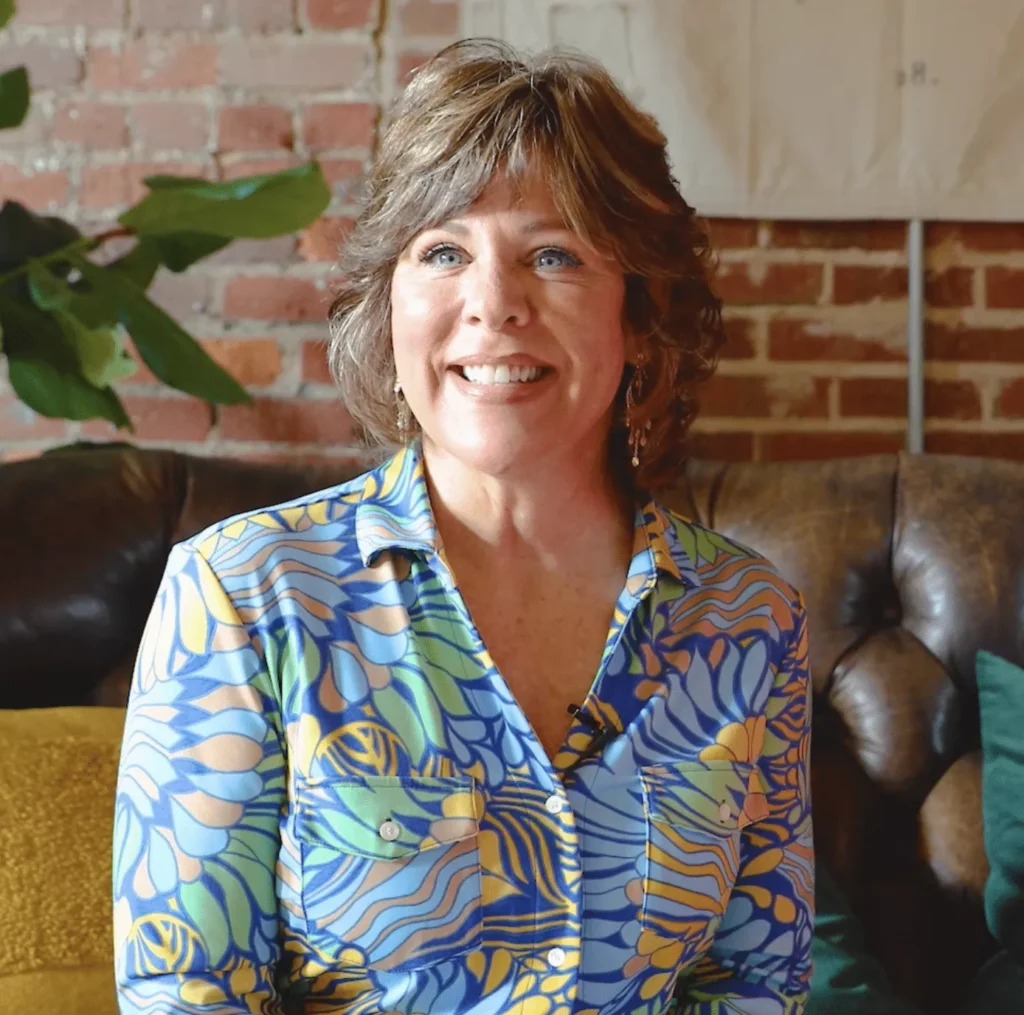
About Jane Gentry
Jane Gentry is a strategic operating model advisor and former CEO of two PE-backed companies who helps mid-market CEOs redesign their companies when revenue grows faster than the business was built to run.
Rate, Review & Follow
Enjoying CEOs Unscripted? We’d love to hear your thoughts! Leaving a quick rating and review not only supports the show but also helps other leaders discover conversations that can elevate their business journey.
Don’t forget to follow the podcast, too! With more insightful episodes and unfiltered conversations on the way, you won’t want to miss what’s next.
CEOs Unscripted
Where Real Talk Drives Real Growth And Delivers Real Results For Mid-market Leaders.
Welcome to CEOs Unscripted, the podcast where real talk drives real growth and delivers real results for mid-market leaders. Each episode offers an unfiltered, behind-the-scenes look at the wins, the losses, and the playbooks shared by CEOs, founders, and executives. Grab a seat and join us for unscripted, honest conversations about what it takes to lead, grow, and scale in today’s business landscape.